

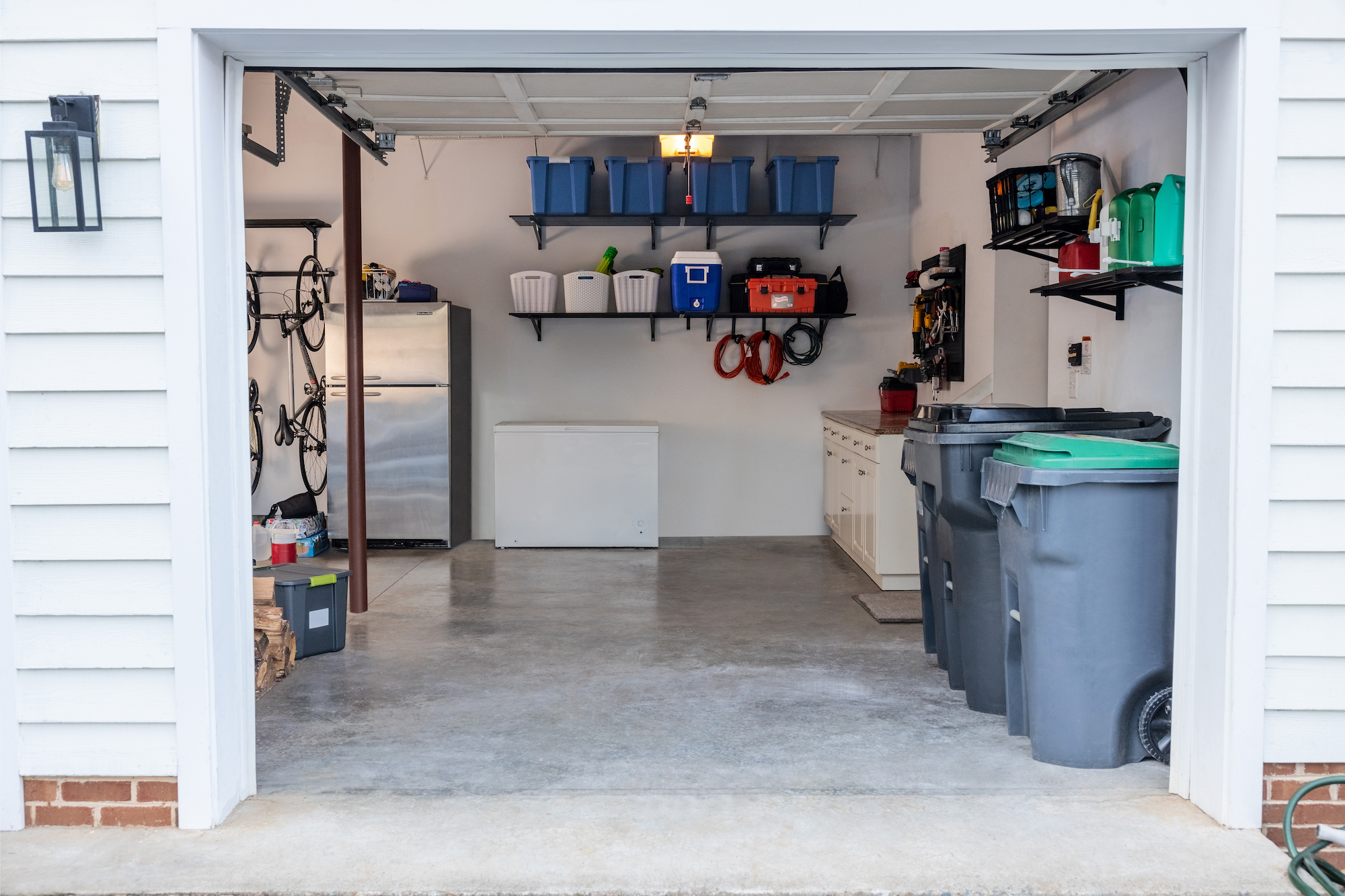

You buy a bike rack because you want cycling to be easier. Then reality hits. The rack does not fit your car as expected, blocks access to the trunk, or becomes a heavy obstacle on the garage floor after the trip.
This guide breaks down the main types of bike racks, shows which work best for different vehicles and space limitations, and covers the part most guides skip: how to store the rack and the bikes cleanly when you get home.
Why the Wrong Bike Rack Becomes Two Space Problems
-
It takes up the wrong kind of space in the car.
- A bulky rack can block your rear view, limit trunk access, and make parking more difficult.
- On smaller cars, this shows up quickly. On taller vehicles, roof racks can be a hassle in low-clearance places like garages.
- What seems like a simple solution can end up making everyday driving less practical.
-
It keeps taking up space after the trip is over
- After the trip, the rack still needs storage.
- A heavy rack on the garage floor becomes something you have to step around or move.
- And the bikes still need space too.
- Without a plan, your garage just swaps one kind of clutter for another.
Start With Your Space Constraints Before You Choose a Rack
Before you compare rack styles, start with a few simple questions.
- What mounting points does your vehicle already have?
- How high are you willing to lift your bikes?
- How much room do you have when the rack is off the car? How heavy are your bikes?
Start here, and the rest of the decision gets much easier. A rack that fits your vehicle is good. A rack that also fits your space is even better.
4 Main Types of Bike Racks
-
Roof-Mounted Bike Racks
Roof-mounted systems attach to crossbars and carry bikes overhead. They’re a strong choice if you want to keep the rear of your vehicle fully accessible, especially when trunk access matters.
They work well for sedans, wagons, and SUVs, and suit drivers who don’t mind lifting bikes onto the roof.

At home:
Pair this setup with a compact wall solution like the Swivel Mount Bike Storage Rack. Its swivel design folds flat against the wall and supports up to 50 lbs per hook, making it a clean, space-saving option after the trip.

-
Trunk-Mounted Bike Racks
Trunk-mounted racks strap onto the rear of your vehicle and are often the most approachable option. They’re lighter, more affordable, and don’t require a hitch or roof system.
This makes them ideal for smaller cars or drivers who want flexibility without adding permanent hardware.
At home:
Because they’re compact, these racks are easier to store. Pair them with a simple, no-fuss bike storage setup to keep your space organized.

-
Hitch-mounted bike racks
Hitch-mounted racks (towbar racks) connect to a trailer hitch receiver and are usually the easiest to load. They’re the most practical option for heavier bikes like mountain bikes or e-bikes.
This category is popular for SUVs, trucks, and anyone carrying multiple bikes.
At home:
Use a dedicated storage solution like the 2" Hitch Wall Mount to hang the rack off the ground and keep your garage floor clear.

-
Spare tire or truck-specific bike racks
These racks are built for more specialized setups. Spare tire racks fit vehicles with rear-mounted spare tires, while truck-specific options are designed for truck beds or tailgates.
They’re less common but solve specific fit challenges when standard options don’t work.
What Works Best in Small vs Large Spaces?
For small spaces:
- Start with trunk-mounted racks
- Consider compact roof-mounted options next
- Easier to store in the car and garage
- Better fit for smaller vehicles and tight storage areas
For larger spaces:
- Hitch-mounted racks become more practical
- Larger roof systems and truck setups also work well
- More room for both transport and storage
Choosing based on ease of use
- Easiest to load: Hitch-mounted racks
- Especially helpful for heavier bikes
Common Mistakes That Waste Space or Create Hard-to-Use Setup
- Choosing the rack before checking vehicle fit
- Underestimating roof loading: Lifting bikes overhead gets tiring over time
- Ignoring bike specs: weight (especially e-bikes), tire size, frame shape, some racks simply won’t handle larger or heavier bikes
- Forgetting storage after the trip
- Where will the rack go when it’s off the car?
- Without a plan, it quickly becomes a garage obstacle
Final Takeaway
When you compare the different types of bike racks, do not stop at how they carry bikes. Think about how they fit your vehicle, how much lifting they require, and where they will go when the trip is over. Trunk racks are often the best fit for smaller spaces. Hitch racks are usually the easiest to load. Roof racks keep rear access clear. And the smartest setup of all is the one that works both on the vehicle and back at home.
FAQs
What type of bike rack is best for a small car?
A trunk-mounted rack is often the easiest starting point for a small car, especially if you do not already have a hitch or roof crossbars. Compact roof systems can also work well if you are comfortable lifting bikes overhead.
Can you use a hitch bike rack on an SUV without a hitch?
No. A hitch bike rack needs a compatible hitch receiver. If your SUV does not have one, you need to add a hitch or choose a different rack type.
How do you store a hitch bike rack when not in use?
The cleanest option is to get it off the floor. A dedicated wall-mounted storage solution like StoreYour’s 2" Hitch Wall Mount is designed for exactly that.
What’s the easiest bike rack to load by yourself?
For most people, a hitch-mounted rack is the easiest to load because it keeps the bikes lower to the ground than a roof rack and usually handles heavier bikes better than a trunk rack.


